Central idea: AI strategy consultants bridge the gap between technological innovation and business success, helping organizations identify, implement, and manage AI solutions to improve efficiency, reduce costs, and remain competitive.
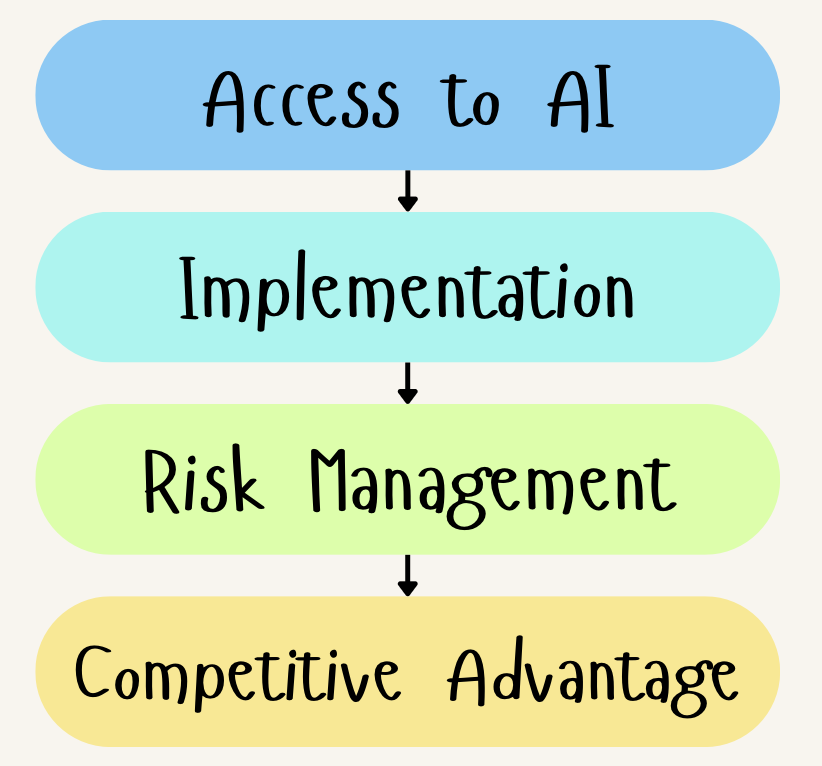
Many may scoff at the idea of chatting with an artificial neural network as a profession; however, artificial intelligence is the key driver of transforming businesses. From chatbots handling inquiries from customers to AI-powered fraud detection, AI has become an essential part of modern industries. Despite this, simply accessing advanced large-language models does not guarantee success; businesses must know how to implement AI effectively and manage risks associated with these technologies. This is where the AI strategy consultants come in. Combining their existing knowledge of math, computer science, and business management, they help organizations turn technological innovations into applicable business solutions. As AI continues to reshape the economy, AI strategy consulting emerges as an exciting career at the intersection between STEM and business
Job Overview: What Does an AI Strategy Consultant Do?
An AI strategy consultant identifies opportunities to use artificial intelligence to improve operations and increase productivity in businesses. Rather than creating artificial intelligence from scratch, they determine how existing technologies can solve real-world problems.
They usually begin by analyzing the existing operations within a company, identifying inefficiencies, evaluating objectives, and determining where AI would fit in to provide meaningful improvements. After identifying these applications, they would recommend suitable technologies and develop strategies for AI integration into the workplace.

For example, an AI strategy consultant working in the retail industry would likely recommend implementing machine learning to analyze consumer purchasing patterns to generate personalized sales and product recommendations, whereas in manufacturing they may introduce predictive mechanisms that identify equipment failures before they actually occur.
Ultimately, the key to this role is not just familiarity with artificial intelligence, but also understanding how technology can transform industries to create economic value.
Day-to-Day Life and Work Environment
A typical day for an AI strategy consultant begins with a meeting with clients or company executives to understand their business objectives. Consultants may observe operational data and potential AI technologies, before evaluating whether implementing a particular solution would be beneficial. Furthermore, they also work hand-in-hand with software engineers, data scientists, and business analysts to ensure that proposed strategies are feasible.
Another responsibility is presenting recommendations. Consultants must be able to explain complex technical concepts in an understandable way to business executives through presentations, reports and financial projections. Most consultants work in a private office within the management consulting firm of large technology companies. However, consulting involves considerable travel, demanding workloads, and tight deadlines, particularly within large corporate clients.

Education and Preparation
For an AI strategy consultant, there is no single required degree—though employers often look for candidates with a strong analytical background and combination of technical knowledge and business applications.
A degree in computer science provides a good understanding of programming, algorithms, machine learning, and artificial intelligence, helping consultants evaluate different technologies and understand their technical capabilities.
Studying mathematics or statistics may also help develop the quantitative reasoning that is required to interpret datasets, understand probability, and evaluate machine learning models. Furthermore, a background in economics or finance is equally important as consultants need to understand the concepts of financial decision-making, organizational management, and market competition.
High school students interested in this career may prepare by studying complex mathematics, computer science, economics, and other related subjects. Learning programming languages such as Python or C++ is particularly useful, as it is widely recognized in data analysis and machine learning.
Skills Required
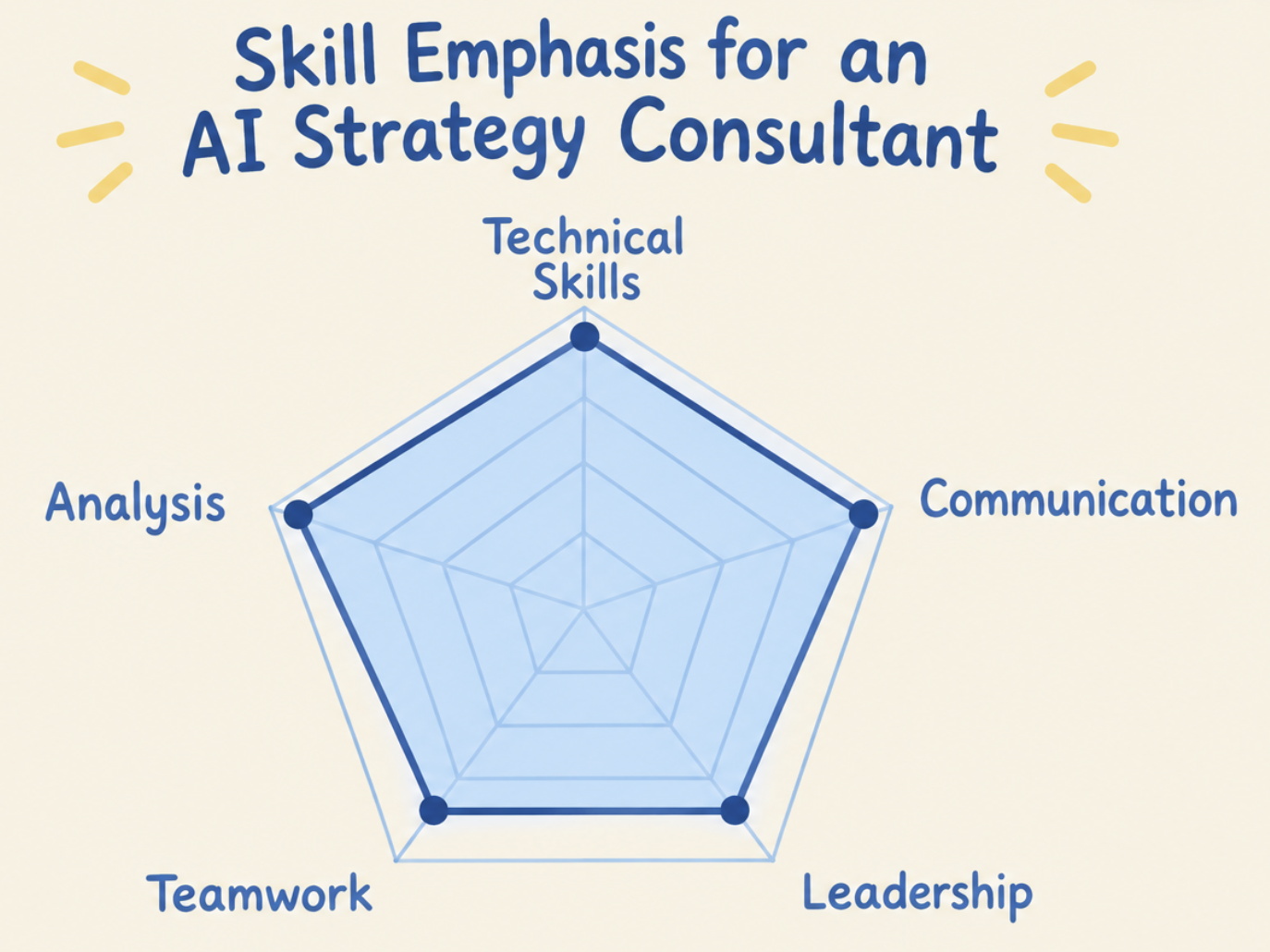
Technical skills are the most important for understanding the recommended technologies. An understanding of programming languages, such as Python or SQL, help consultants work with data and communicate effectively with technical teams. An understanding of machine learning, statistics, and data analysis allows them to evaluate AI systems and interpret their results.
However, technical knowledge alone isn’t enough. Soft skills are equally important as consultants frequently work with clients who have little technical experience. Communication is another particularly useful skill. Consultants must be able to translate complex technological ideas into business recommendations that the average person can understand. Leadership and teamwork are also important when coordinating engineers, executives, and other professionals.
Salary and Employment Opportunities
AI strategy consulting can offer attractive financial opportunities, although compensation varies considerably depending on experience, location, qualifications, and employer.
At the beginning of their careers, individuals may work as junior consultants, business analysts, or AI analysts. As they gain experience, they can progress into senior consulting positions, managing larger projects and advising major organizations. Eventually, experienced professionals may become AI strategy directors or Chief AI Officers, overseeing an organization's broader artificial intelligence initiatives.
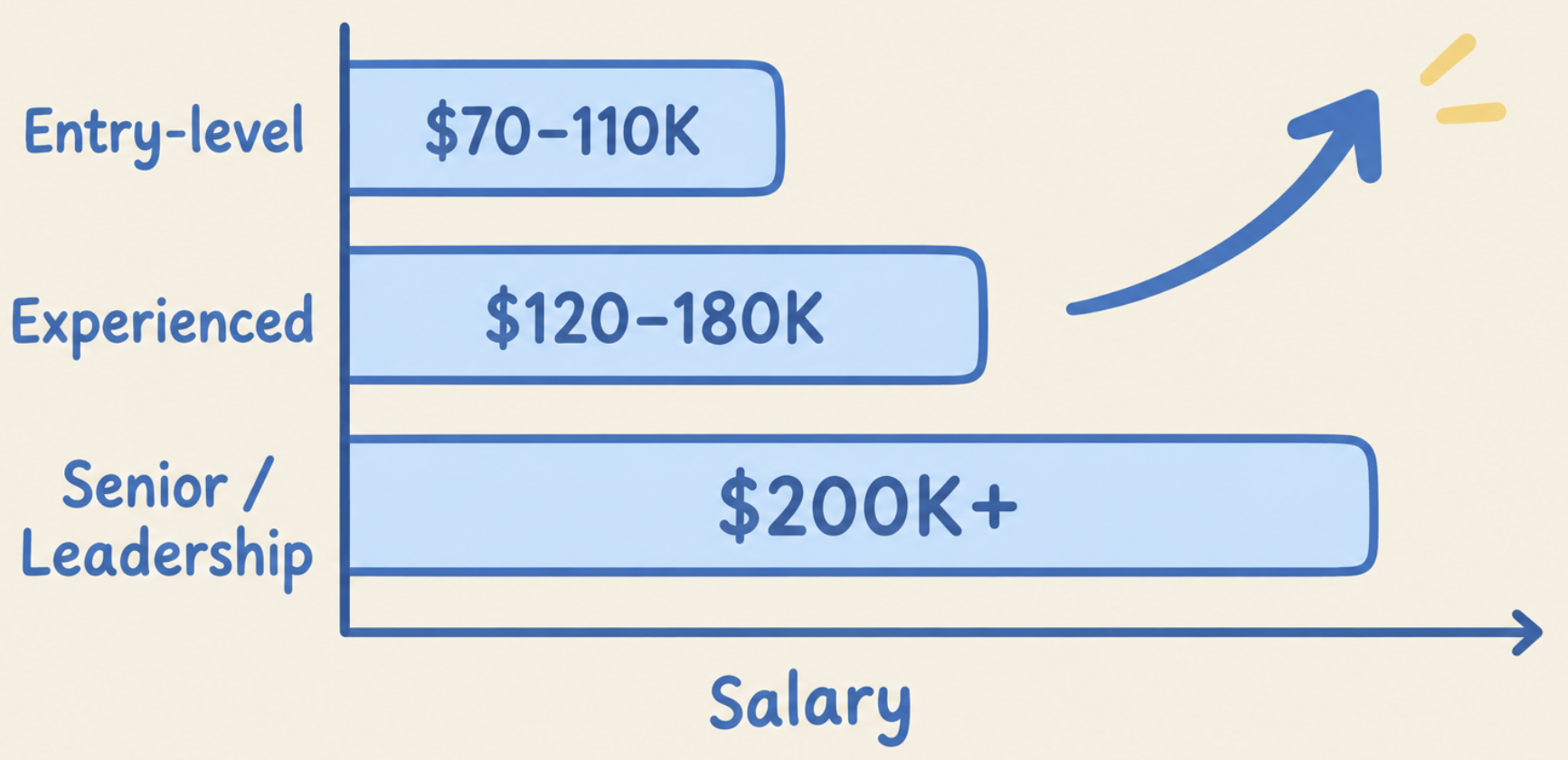
In the United States, entry-level and junior AI consulting-related positions may offer approximately $70,000-$110,000 annually, while experienced consultants can earn $120,000–$180,000 or more. Senior specialists and leadership positions at major consulting or technology firms can exceed $200,000, particularly when bonuses and other compensation are included. These figures are illustrative estimates rather than guaranteed salary ranges, as job titles and compensation structures differ significantly.
Employment opportunities are also expanding across multiple industries. Traditional management consulting firms, technology companies, financial institutions, healthcare organizations, and manufacturing corporations increasingly need professionals who can guide their AI adoption.
As generative AI and automation become more widely adopted, businesses will likely place greater importance on professionals who can evaluate AI investments, manage implementation, and ensure that technological developments align with organizational goals.
Challenges and Job Satisfaction
Despite its promising opportunities, AI strategy consulting comes with several challenges.
One major difficulty is the rapid pace of technological development. AI tools and models evolve continuously, presenting a challenge for consultants to remain informed about and adapt to the latest developments. Additionally, implementing AI within established organizations can be complicated. Employees may resist changes to familiar workflows, while companies may struggle with outdated infrastructure or insufficient data.
There are also ethical and financial considerations. AI systems can produce inaccurate or biased results, potentially leading to poor business decisions. Consultants must therefore consider data privacy, algorithmic fairness, and the long-term consequences of automation. Furthermore, not every AI investment produces sufficient financial returns, making it essential to carefully evaluate costs and benefits before recommending implementation.
Nevertheless, the career can be highly rewarding. Consultants have opportunities to work with cutting-edge technologies, solve complex problems, and influence how major organizations operate. Seeing an AI solution improve efficiency, reduce costs, or create entirely new business opportunities can provide considerable professional satisfaction.
Conclusion
Being an AI Strategy consultant is definitely a field where math, computer science, and economics meet in an exciting way. As AI is revolutionizing different industries in many ways, in the future companies are going to need specialists who would be able to link innovations in technologies and their applications within the companies. This job will require not just the knowledge of coding but analysis, creativity, and understanding the value of the work from the economical point of view. Though it could be quite difficult to keep up with the fast development of artificial intelligence, at the same time this field offers great opportunities for those who like to solve difficult tasks and try something new.
Written by: Leo Song, Edited by: Rachael Zhou & Visuals by: Shannon Gao
