
Imagine working with technology that could transform medicine, cybersecurity, artificial intelligence, and scientific research. Quantum computation is a unique and exciting profession that differs from conventional computer science. Rather than relying solely on traditional binary systems of zeros and ones, quantum computers use the principles of quantum mechanics to process information in inherently different ways.
As this technology continues to develop, a new career field is emerging: quantum computing. For those interested in physics, mathematics, computer science, and engineering, this field offers an opportunity to work at the forefront of technological innovation.
So how can you get involved? What does a career in quantum computing look like? What qualifications are required? How much can you actually earn? What does the future of this industry look like?
Job overview: What does a quantum computing professional do?
A quantum computing professional develops, researches, builds, or maintains technologies that use quantum mechanics to perform computations.
Quantum computing is not a single occupation—instead, professionals specialize in several areas:
A quantum software engineer develops software, algorithms, and programs that run on quantum computers.
A quantum hardware engineer designs, maintains, and experiments with the physical components of quantum computers, including qubits and control systems.
A quantum research scientist studies quantum mechanics and develops new theories, algorithms, and computing technologies.
A quantum algorithm developer designs algorithms using quantum principles to solve specialized computation problems.
A quantum systems engineer integrates hardware, software, and control systems to ensure quantum computers operate more effectively
These professionals contribute to applications such as molecular simulations, materials discovery, optimization, and cryptography. Many proposed applications are still being researched and the field is rapidly expanding.
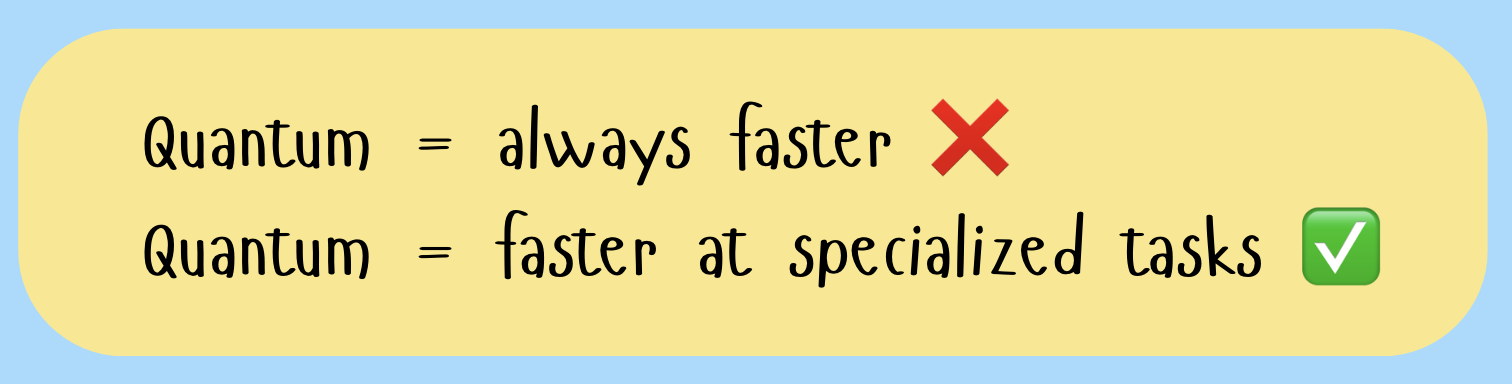
While quantum computers are not universally faster or better than classical computers, they are quicker at solving complex specialized tasks.
Day-to-day life: What does an average day look like for a quantum computing professional?
A quantum computing professional’s daily schedule relies heavily on their field of profession. However, most positions include a combination of research, programming, experimentation, and collaboration.
To start the day, a professional may begin to plan and research by reviewing scientific papers, studying quantum algorithms, or discussing project objectives with their colleagues. Afterwards, they would typically enter their programming and development stage, which involves writing Python or C++ code to simulate quantum circuits, test algorithms, or improve quantum software.
During this process, they would run simulations or conduct physical experiments with quantum processors to evaluate their performance, helping them identify errors in their quantum calculations, troubleshoot hardware, and analyze their experimental results. Finally, their day would end by collaborating with other physicists, engineers, mathematicians, and computer scientists to discuss progress and develop solutions.
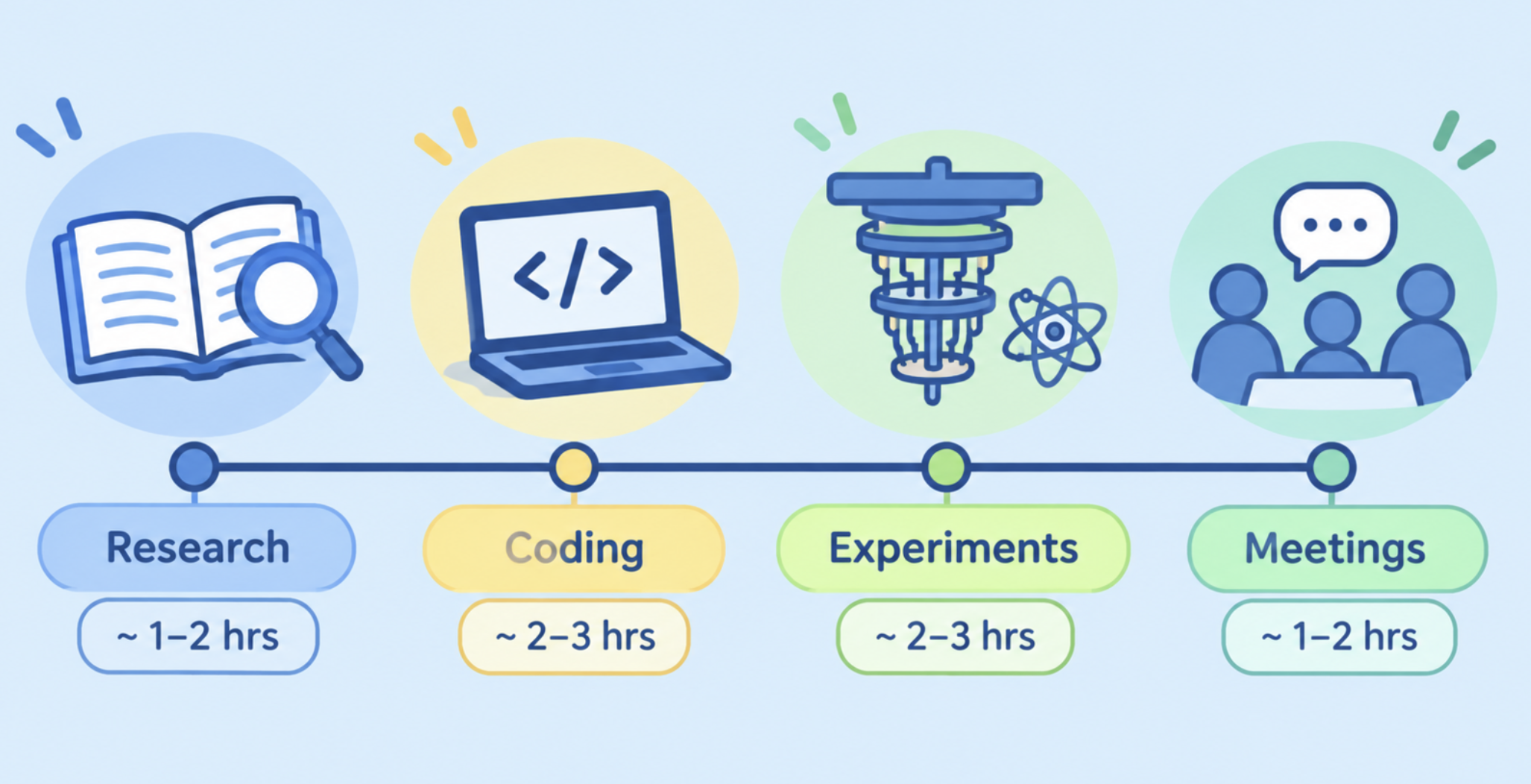
Despite this, the areas of quantum computing in which these professionals specialize weigh heavily in determining their schedule. For example, a quantum software engineer may spend most of their day programming and testing algorithms, while a quantum hardware engineer may spend considerably more time working with specialized laboratory equipment.
Education and Career Preparation
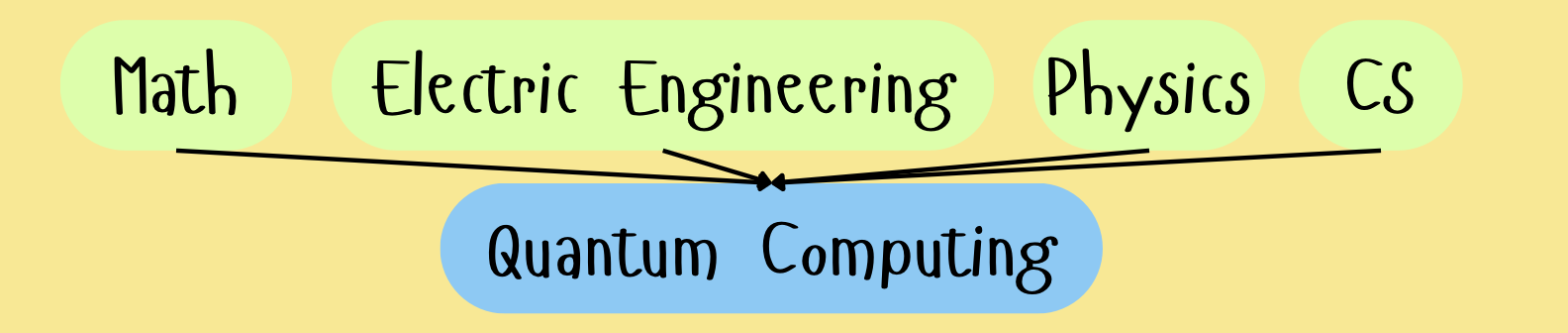
There is no single educational pathway into quantum computing, though the typical prerequisites of many quantum computing professions require a degree in Computer Science, Electrical Engineering, Mathematics, Physics, or any related fields. A bachelor’s degree is often sufficient for certain engineering and software positions. However, advanced research positions generally require a master’s degree or doctorate.
Similarly, there is currently no universally required professional certification or licensing examination for quantum computing professionals. Instead, employers typically evaluate academic qualifications, programming experience, research experience, and practical projects.
What can High School Students do to Prepare?
Students interested in entering this field should begin developing their mathematical, scientific, and computational foundations before university. Mathematics is essential to understanding quantum mechanics and developing quantum algorithms, and particularly useful areas of mathematics include: Differential and multivariable calculus, linear algebra, probability and statistics, complex numbers, and discrete mathematics. These topics may sound daunting at first, but quantum computational experts use these skills every day to the point that they may be better at some of these fields than the mathematicians themselves!
Other skills include learning Python, which is an excellent starting point for many beginners. Students can eventually explore libraries to create and simulate basic quantum circuits. Mathematics and physics competitions, robotics clubs, science fairs, and independent research projects can also help develop analytical and problem-solving abilities.
Salary and Employment
Quantum computing is a relatively young industry, so salaries vary significantly depending on specialization, qualifications, experience, and employer.
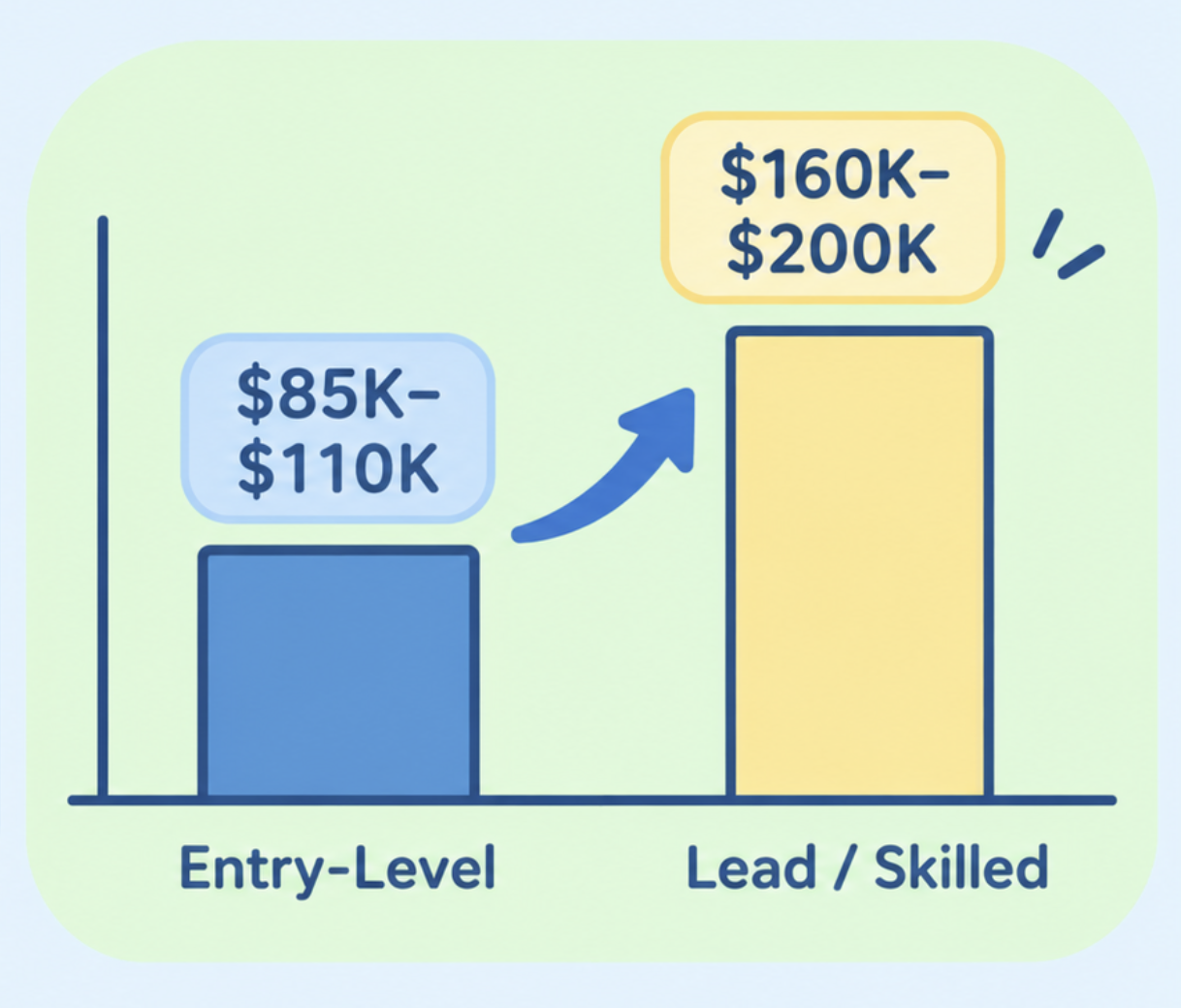
For a Canadian, an entry-level junior professional may expect a salary ranging from $85,000 to $110,000 CAD, while lead experts and skilled practitioners can expect an approximate $160,000 to $200,000 CAD. However, these figures do not represent their strict salary levels; a highly specialized researcher with a PhD may earn less than a regular quantum engineer depending on location, company funding, or whether the position is in academia or industry.
Is Quantum Computing the Right Career?

Quantum computing is an exciting and excellent path for individuals who enjoy mathematics, physics, computer science, and engineering. It combines theoretical scientific knowledge with practical technological development, creating opportunities to contribute to some of the most ambitious research projects of the modern era.
However, it is important to recognize that this career requires substantial dedication. Advanced mathematics, years of technical education, and persistent problem-solving skills are essential, particularly for research-focused positions.
If you’re a high school student interested in quantum computing, the best preparation is to develop a strong foundation in mathematics, physics, and programming while exploring opportunities to experiment with quantum computing technologies.
Though this industry is still in its early stages, its continued development could make quantum computing one of the most influential technological fields of the upcoming decades.
Written by: Leo Song, Edited by: Rachael Zhou & Visuals by: Shannon Gao
